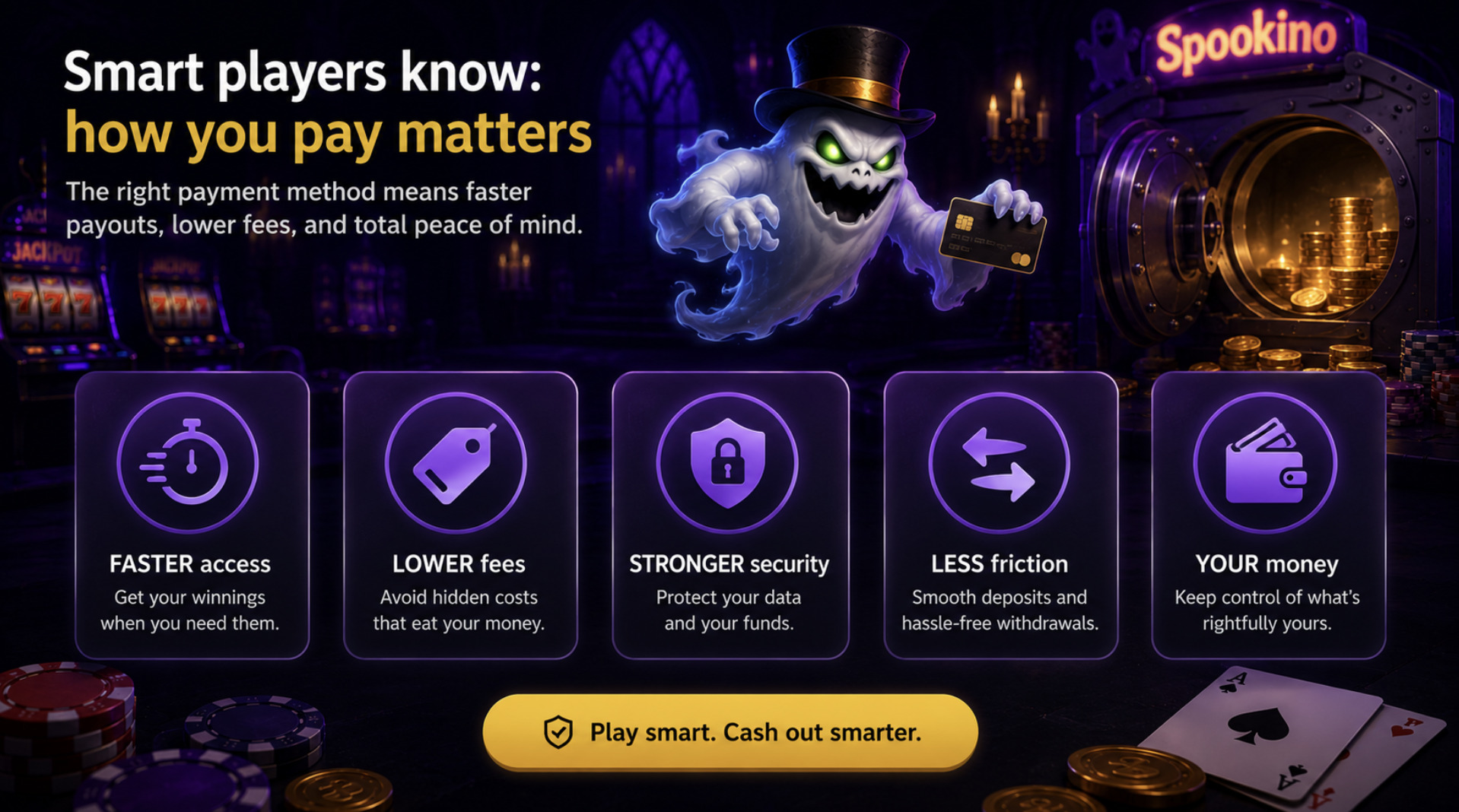
Players tend to obsess over which games to play and pay little attention to how they move money in and out of an online casino. This is backwards. The payment method you choose quietly shapes some of the most important parts of the experience: how quickly you can access winnings, whether you pay hidden fees, how secure your financial details are, and how much friction stands between you and your own money. The mechanics of deposits and, especially, withdrawals deserve far more attention than they usually get.
Deposits are easy; withdrawals reveal the truth
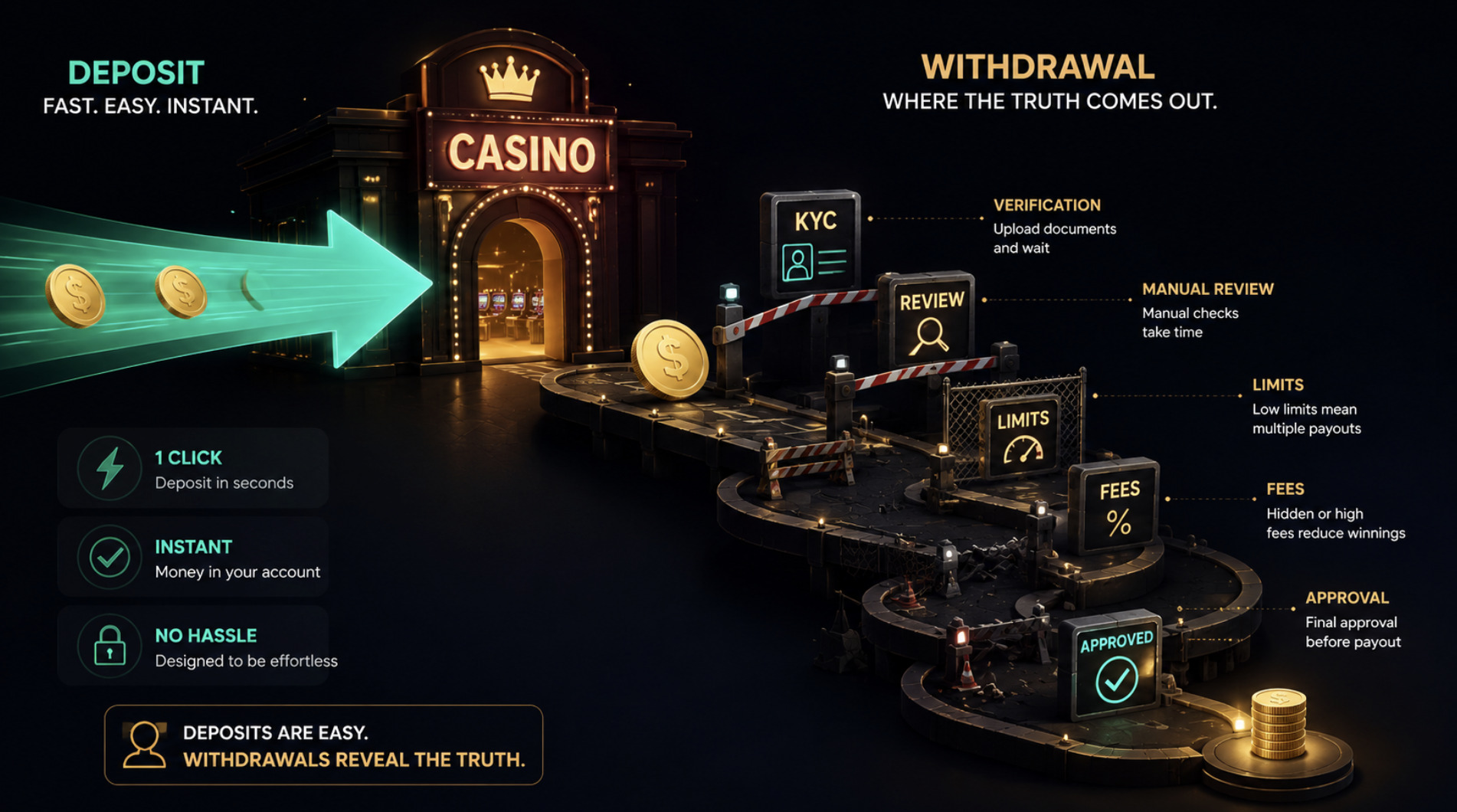
There is an asymmetry at the heart of casino payments that every player should understand. Depositing money is almost always fast, smooth, and instant — operators have every incentive to make putting money in effortless. Withdrawing it is where the real character of a payment method, and of the casino itself, shows through. Withdrawal speed, limits, fees, and verification requirements vary enormously, and they are what actually determine your experience of getting paid.
This is why judging a payment method by how easily it lets you deposit is a mistake. The deposit side is uniformly frictionless by design. The withdrawal side is where the meaningful differences live, and it is where players are most often surprised — by a method that took days to pay out, a limit that forced winnings to be withdrawn in slow instalments, or a verification step that held funds while documents were reviewed. Evaluating payments through the lens of withdrawal, not deposit, is the single most useful shift in perspective.
The main families of payment method
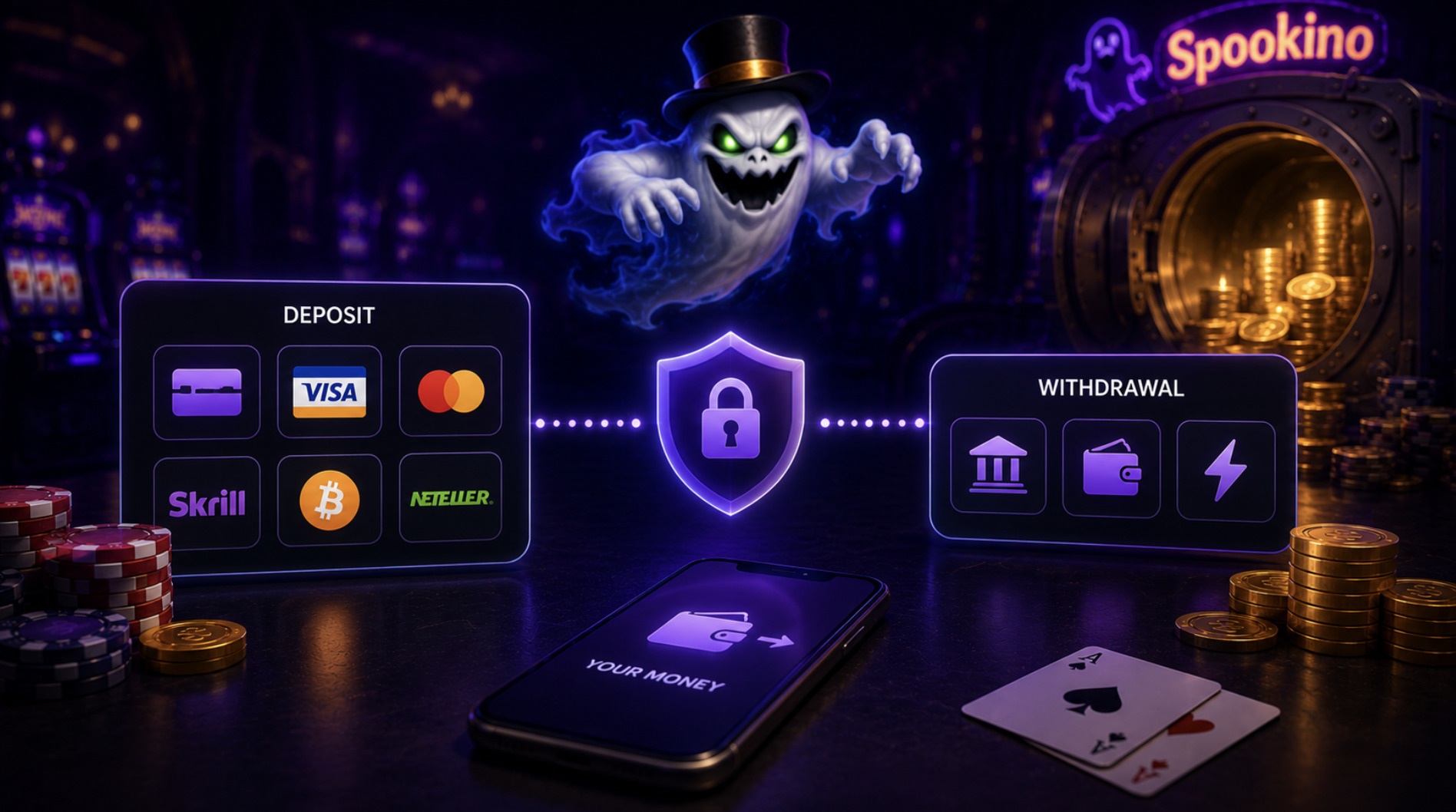
The options available at a typical online casino fall into a few broad families, each with distinct trade-offs. Cards, both debit and credit, are the most familiar and widely accepted; they are simple to use for deposits but can be slower for withdrawals, and in some regions their use for gambling is restricted. Bank transfers move money directly to and from an account, are secure and suited to larger sums, but have traditionally been among the slower methods, though instant bank-transfer schemes have improved this considerably in many markets.
E-wallets — digital wallets that sit between your bank and the casino — have become popular precisely because they tend to offer the fastest withdrawals, often processing payouts in hours rather than days, while adding a layer of privacy by keeping your bank details away from the casino. Prepaid vouchers offer a way to deposit without linking any personal financial account, appealing to players who value control over spending, though they typically cannot be used to withdraw. And increasingly, cryptocurrencies form their own family, with their own speed and privacy characteristics. Each family suits a different priority, and knowing which matters most to you is the starting point.
Speed, fees, and limits: the details that matter
Three practical variables separate a good payment experience from a frustrating one. The first is speed, particularly of withdrawals. Some methods return winnings within hours; others take several business days, partly because the casino applies its own processing or "pending" period before the funds even reach the payment provider. For a player eager to access winnings, this difference is significant, and e-wallets and certain instant methods generally lead here.
The second is fees. Most reputable casinos do not charge for deposits or withdrawals, but some payment providers apply their own charges, and certain methods carry costs that quietly erode a balance. The third is limits — minimum and maximum amounts per transaction and per period, which can force large winnings to be withdrawn slowly across multiple transactions. None of these is visible in the simple act of choosing a payment logo at the cashier; all of them are worth checking in advance. Operators that lay out the speed, fees, and limits of each method clearly — a site such as Spookino casino that publishes its withdrawal times and conditions plainly — make this comparison possible rather than leaving players to discover the details when they try to cash out.
Security and the KYC step
Wherever money moves, security is paramount, and payment methods differ in how they protect it. Methods that keep your core financial details away from the casino — e-wallets, certain prepaid options, and cryptocurrencies — reduce the number of places your sensitive information is stored, which limits exposure. Cards and direct bank transfers involve sharing more, though reputable casinos protect that data with strong encryption.
Regardless of method, players will encounter identity verification, commonly known as KYC (Know Your Customer). Before a first withdrawal, a licensed casino will typically ask for documents confirming identity and address. This can feel like an obstacle, but it exists for good reasons: it protects against fraud and money laundering and confirms that winnings are paid to the rightful person. The practical advice is to complete verification early rather than at the moment of your first withdrawal, so that a delay does not arrive precisely when you want your money. A verification requirement is a sign of a properly regulated operator, not an inconvenience to be resented.
Matching the method to your priorities
Because each payment family optimises for something different, the right choice depends on what you personally value most. If fast access to winnings is the priority, e-wallets and instant methods generally serve best. If you prefer to keep your bank details away from the casino, wallets, vouchers, and crypto do that. If you are moving larger amounts and value directness, bank transfer may suit despite its slower pace. If controlling spending is your concern, prepaid options impose a natural ceiling by design.
There is rarely a single best method for everyone; there is a best method for your priorities. The useful exercise is to decide which factor — speed, privacy, cost, control, or convenience — matters most to you, then choose accordingly, rather than defaulting to whatever is most familiar. It is also worth remembering that the method used to deposit is often required for withdrawal too, so choosing well at the start affects how you will be paid later. A little deliberation at the cashier pays off every time you move money.
Conclusion
Payment methods are the plumbing of the online casino, and like plumbing, they are easy to ignore until something goes wrong. Yet the choice you make shapes how fast you get paid, what it costs you, how your financial details are protected, and how much friction stands between you and your winnings. Deposits are uniformly easy; it is withdrawals that reveal the real differences, so judge methods by how they pay out, not how they take in. Understand the families and their trade-offs, check speed, fees, and limits before you need them, complete verification early, and match the method to your own priorities. Do that, and the part of online gambling most players overlook becomes one they quietly get right every time.