/* dev archive · est. 2005 */
MagicAjax.NET The classic AJAX engine for ASP.NET developers.
A modern archive and developer magazine about ASP.NET AJAX, WebForms, legacy .NET applications, and the evolution of interactive web development.
using MagicAjax;
using System.Web.UI;

public partial class Default : Page
{
  protected void btnRefresh_Click(object sender, EventArgs e)
  {
    // no postback. no flicker. just magic.
    AjaxCallHelper.Write("document.title",
      "Updated @ " + DateTime.Now);
    panel.Update();
  }
}// featured
Editor's pick


How to Use prefers-reduced-motion in CSS Without Killing Your Animations
Sep 28, 2026

How to Audit AI-Generated CSS Before It Ships
Sep 28, 2026

The Humble Form Element and Everything the Web Forgot It Could Do
Aug 19, 2026

How the Web Learned to Update Without Reloading the Page
Aug 13, 2026
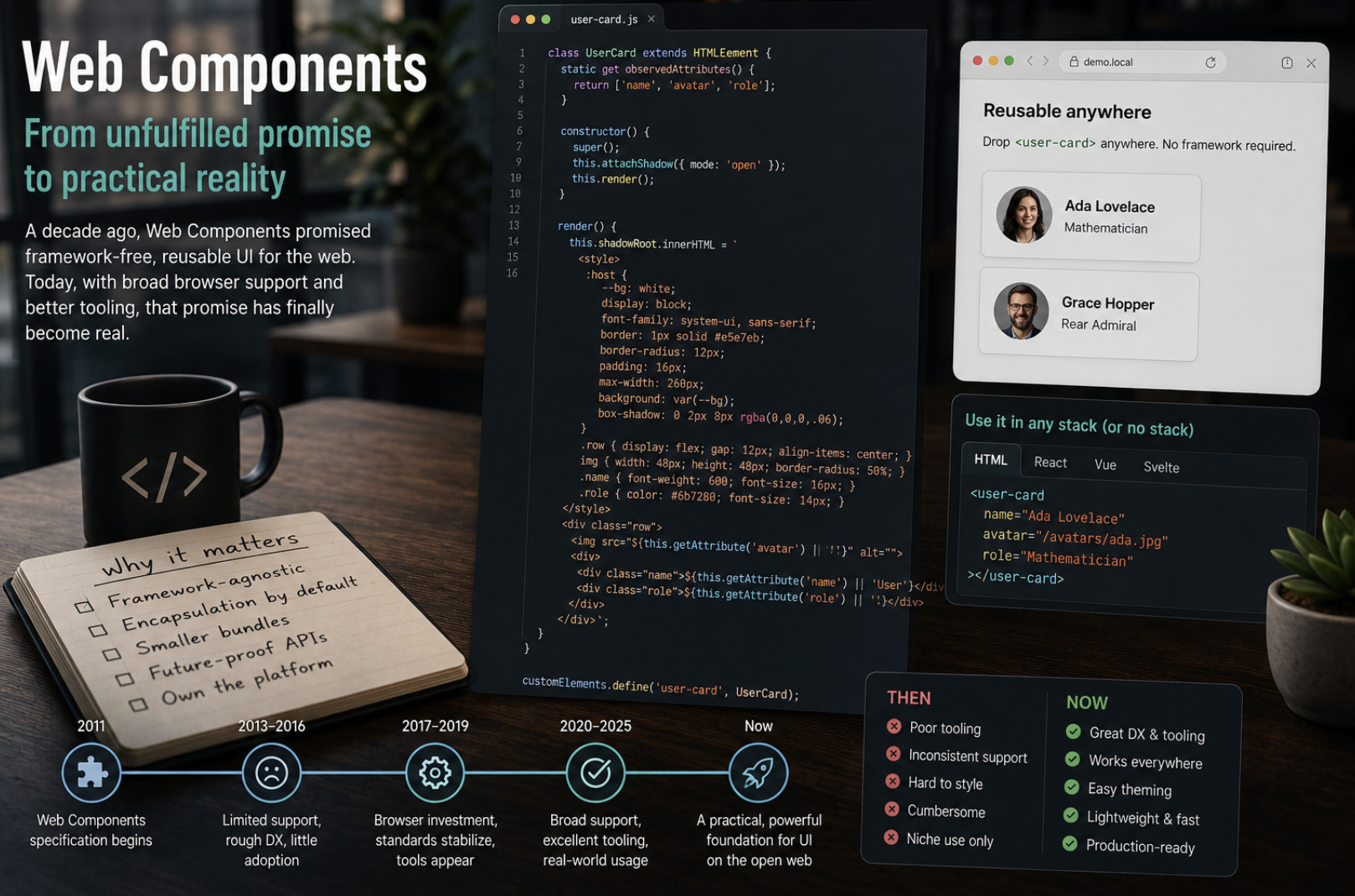
Web Components and the Browser Finally Catching Up
Every few years a technology arrives promising to free web developers from the churn of frameworks: reusable interface pieces that work everywhere, in any stack, without a build s…

Minimal APIs in .NET and the Quiet Death of the Controller
For nearly two decades, building a web endpoint in .NET meant the same ritual: a controller class, a base class to inherit, attributes to decorate, and a small mountain of ceremon…
AMBER · category
AJAX & Modern Web
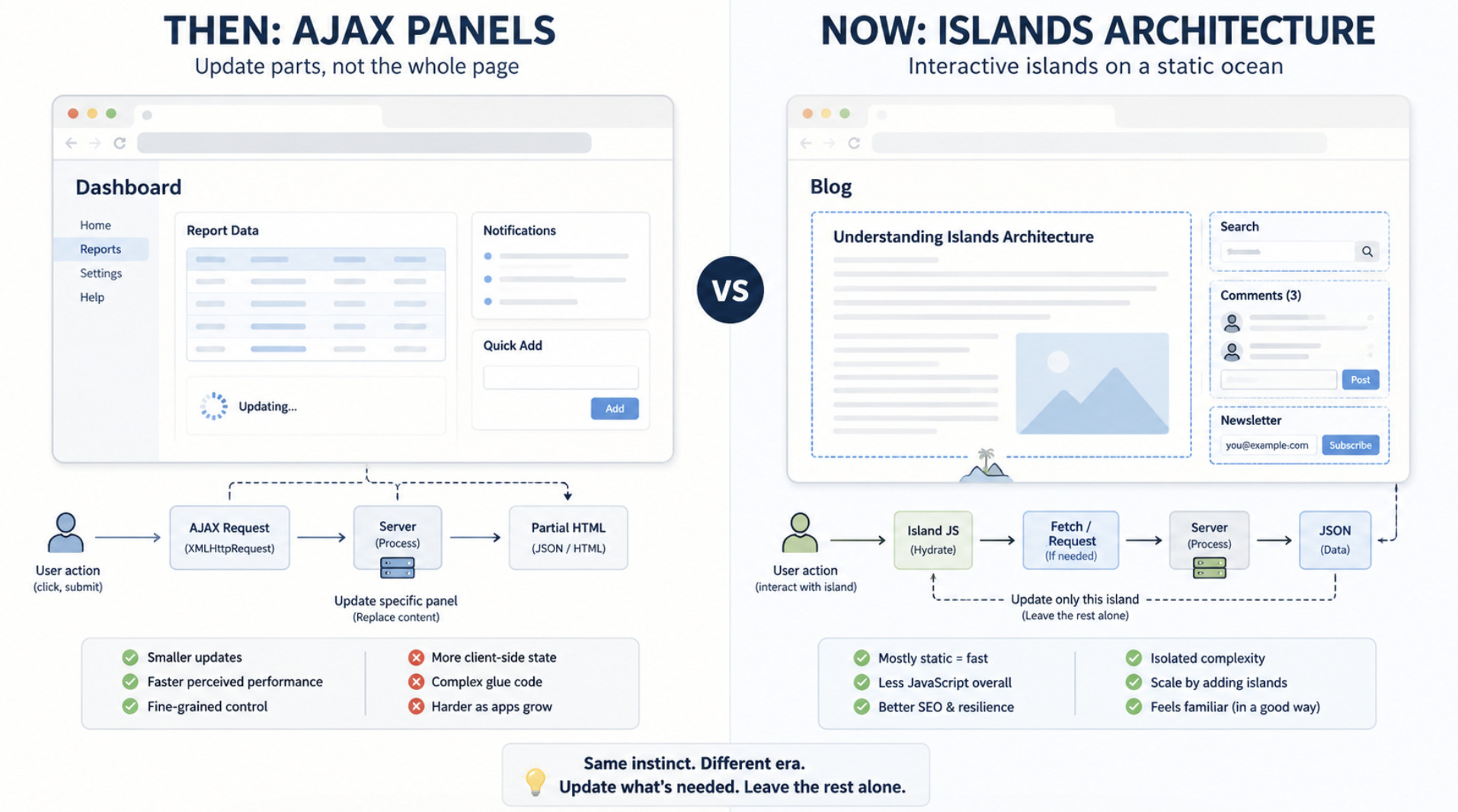
Islands Architecture and the Return to Shipping Less JavaScript
For anyone who has watched web development long enough, the newest fashionable idea often carries a familiar echo. Islands architecture is one of those ideas. It proposes that a w…

The Server-Side Rendering Comeback That Reshaped the Web
For anyone who has built web applications long enough, the current enthusiasm for server-side rendering carries a distinct sense of déjà vu. The idea of the server producing HTML…

How to Build a Real-Time Crypto Price Tracker with AJAX
A real-time crypto price tracker is one of the best projects for learning modern web data flows. It touches everything: external APIs, polling versus streaming, AJAX updates, WebS…
VIOLET · category
Legacy & Modernization
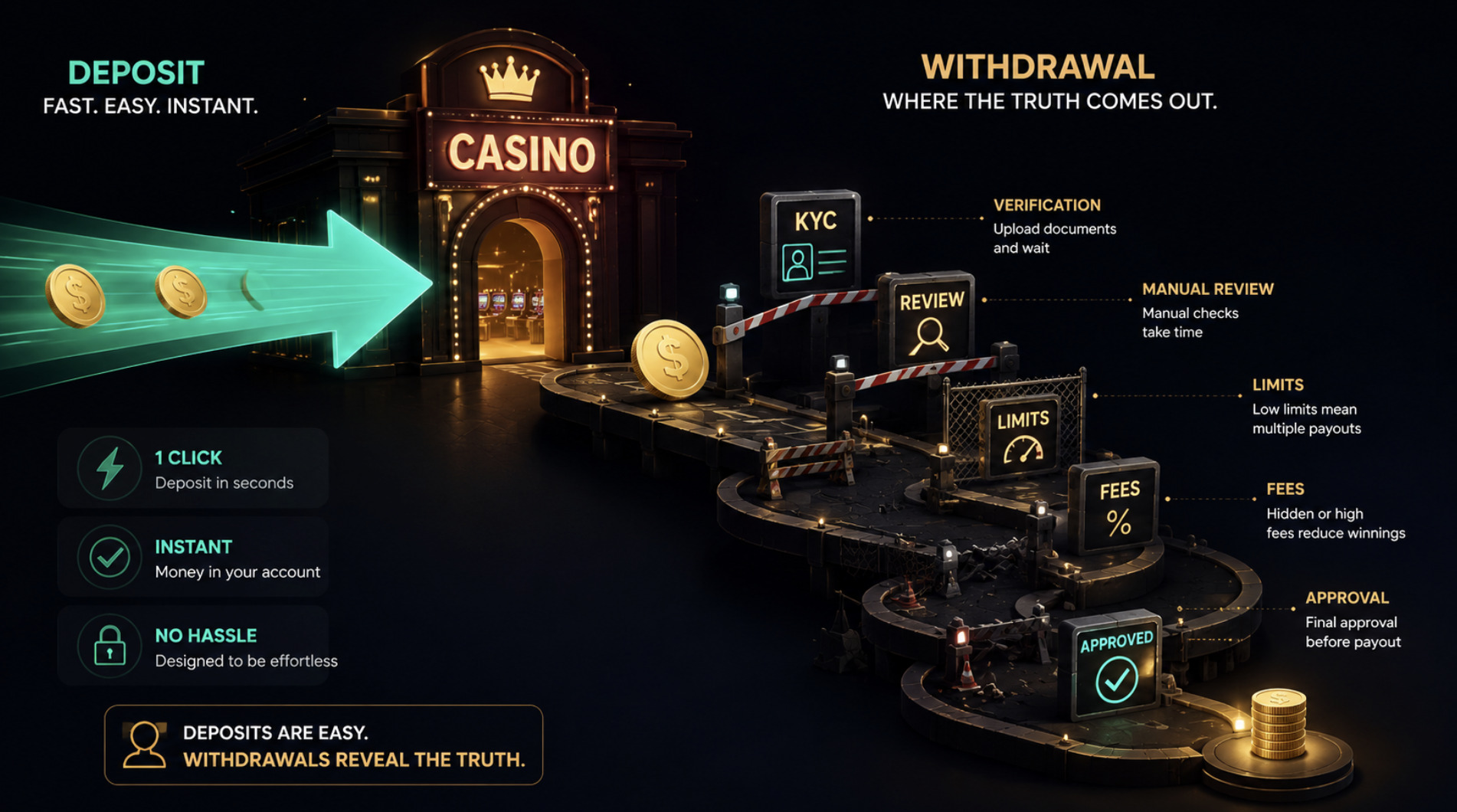
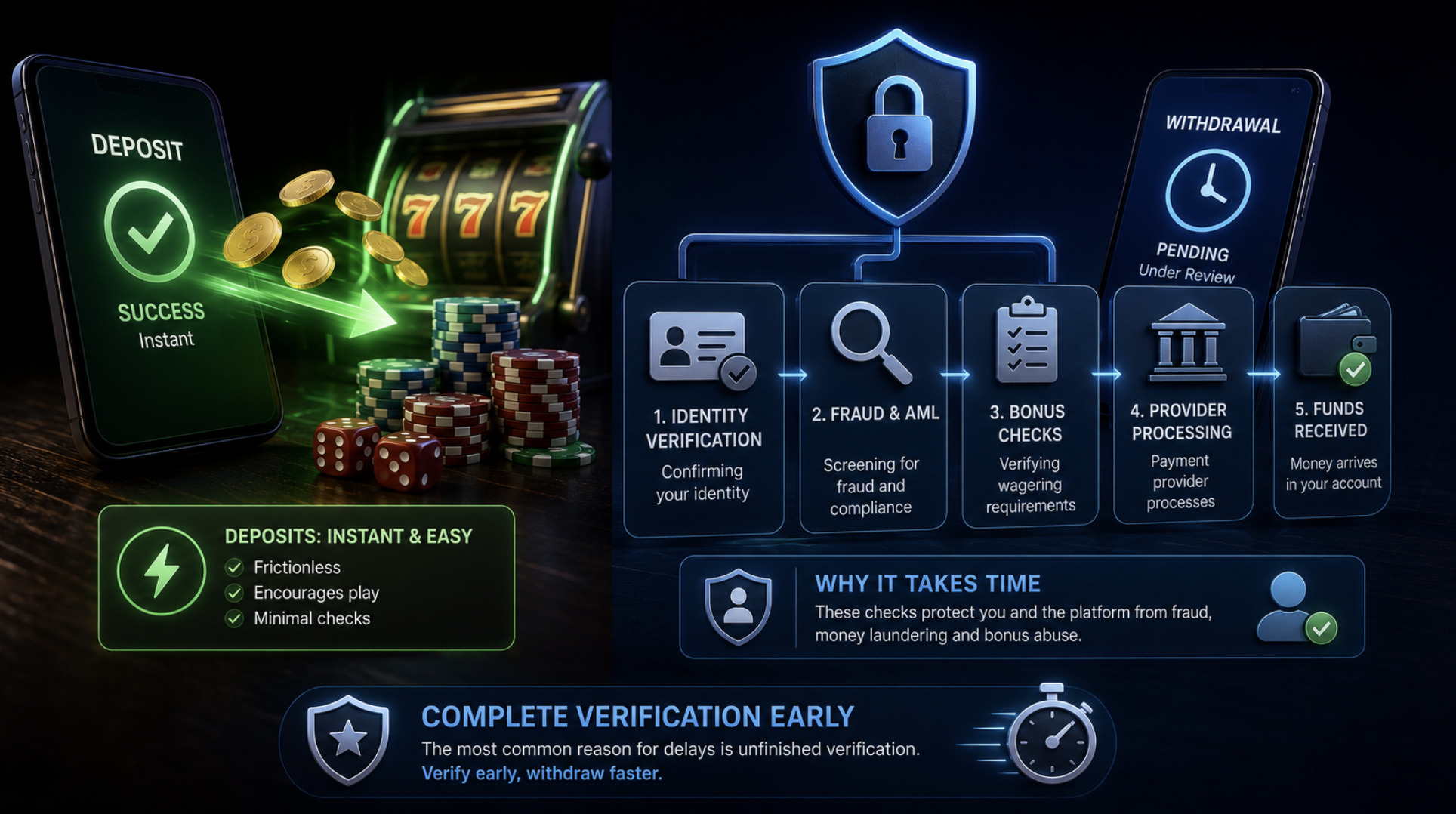
The Payment Choice That Shapes Your Whole Casino Experience
Players tend to obsess over which games to play and pay little attention to how they move money in and out of an online casino. This is backwards. The payment method you choose qu…

Modernizing Legacy ASP.NET Applications Without a Full Rewrite
A surprising amount of the business world still runs on ASP.NET WebForms and older ASP.NET MVC applications targeting the .NET Framework. These systems were often built fifteen or…

ViewState — What It Actually Was, Why It Broke Things, and What Modern Frameworks Quietly Learned From It
If you started writing web applications after about 2014, there is a reasonable chance that the first time you opened the DevTools on a WebForms application, you saw a hidden fiel…
AMBER · category
.NET Architecture
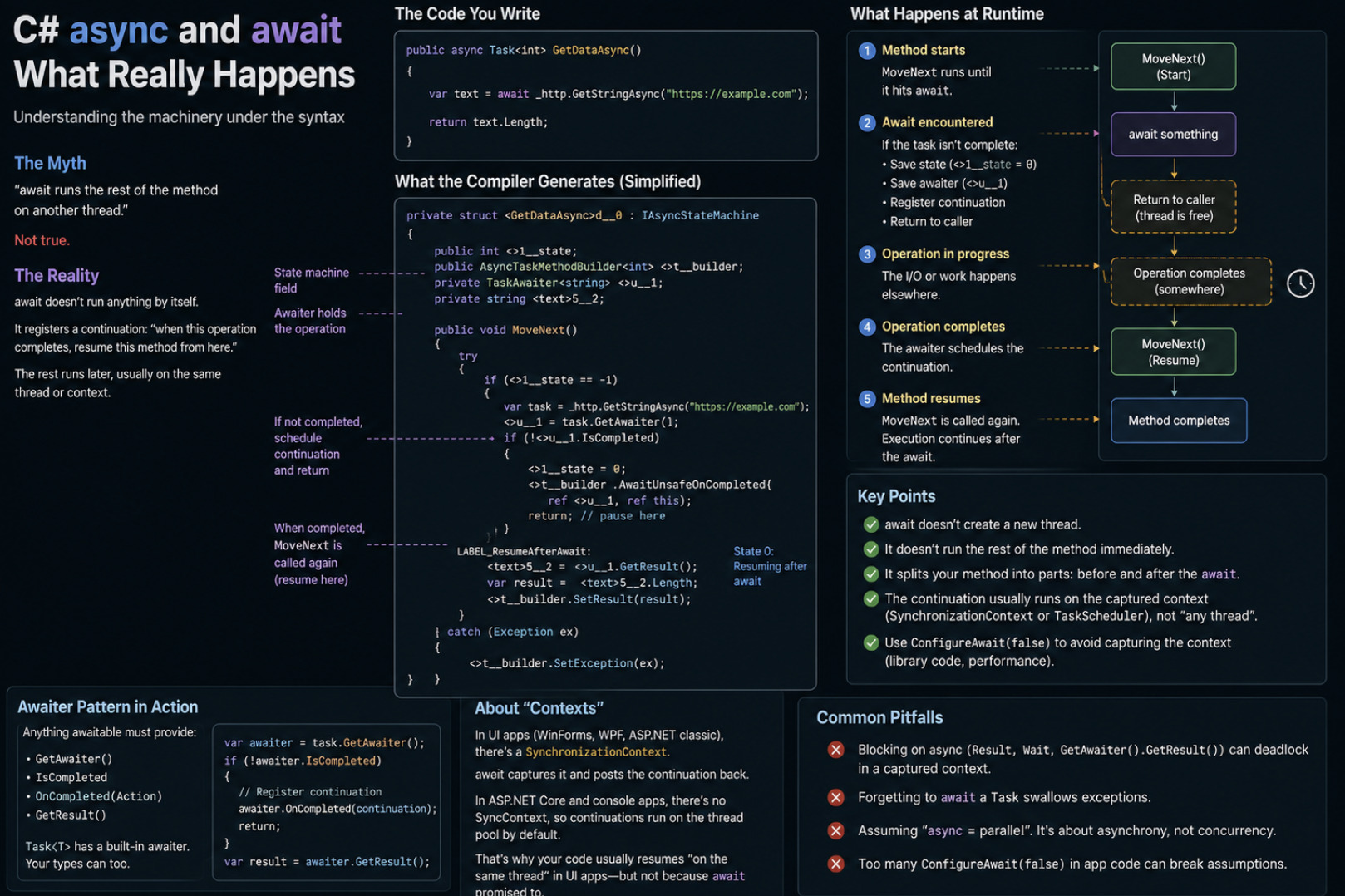
What async and await in C# Really Do Under the Hood
Few features in C# are used as widely, or understood as shallowly, as async and await. Almost every modern .NET codebase is threaded through with them, and most developers can wri…
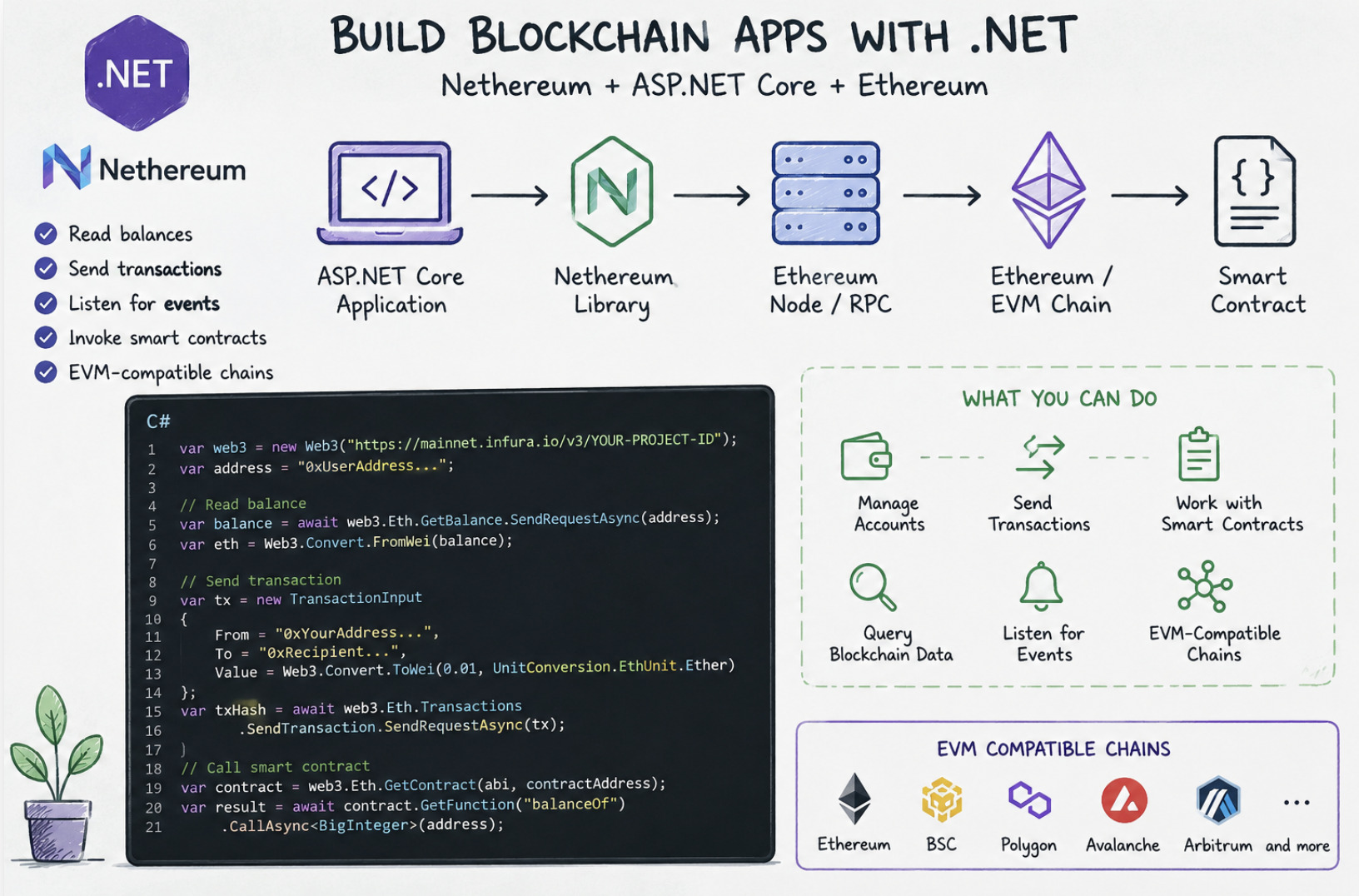
Building Blockchain Applications with .NET
Building blockchain applications with .NET is far more approachable than most C# developers assume. You do not need to abandon the tooling you already know, learn Solidity end-to-…

How to Build a Crypto Payment System in .NET
Accepting cryptocurrency is no longer a fringe feature. Whether you run a SaaS product, an online store, or a donations platform, adding a crypto payment system in .NET gives you…
AMBER · category
WebForms Legacy
// archive
Classic MagicAjax Resources
The original sections of the project — preserved, dusted off, and ready to read.
// features
Features
Core capabilities of the original MagicAjax framework.
Open// readme
Readme
Project introduction, philosophy and goals.
Open// usage_guide
Usage Guide
How to integrate AJAX panels into ASP.NET pages.
Open// changelog
Changelog
Release history from 0.2 to 0.3 and beyond.
Open// old_demos
Old Demos
Tic-Tac-Toe, Live Chat, .NET 2.0 examples.
Open// sourceforge_archive
SourceForge Archive
Historical project hosting and discussions.
Open// timeline diff
From AJAX panels to the modern web
The ideas that made MagicAjax magical didn't disappear — they re-emerged in newer stacks. Here's how the era translates today.
Then:
ASP.NET WebForms + AJAX Panels
- ─ Server controls
- ─ ViewState
- ─ Postback model
- ─ Magic AJAX panels
- ─ IIS / .NET 1.1 → 2.0
Now:
Blazor, Razor Pages, HTMX, React, Alpine.js
- + Component model
- + Hydration / SSR
- + Edge runtimes
- + Hypermedia (HTMX)
- + TypeScript everywhere
// nostalgia.log
Old habits, hard-won wisdom
A lighter editorial corner about ViewState wars, browser compatibility scars, the era before npm — and the funny problems we used to solve before modern frameworks made them invisible.
// WAR STORY
The day a 2 MB ViewState ate our staging server
Coming to the editorial blog.
// COMPATIBILITY
Why document.all still haunts me
Coming to the editorial blog.
// CULTURE
jQuery as a UI framework: tabs, dialogs and a single .ascx
Coming to the editorial blog.
// OPS
When IIS recycled the app pool right before the demo
Coming to the editorial blog.
// contribute
Maintain a legacy ASP.NET project? We want your story.
We publish practical tutorials, war stories, and modernization guides for developers still working with .NET 1.1 → 4.x and beyond.